Molten Metal Flow

Molten Metal Flow
Showing posts with label Steve Parry. Show all posts

Friday, 11 October 2024

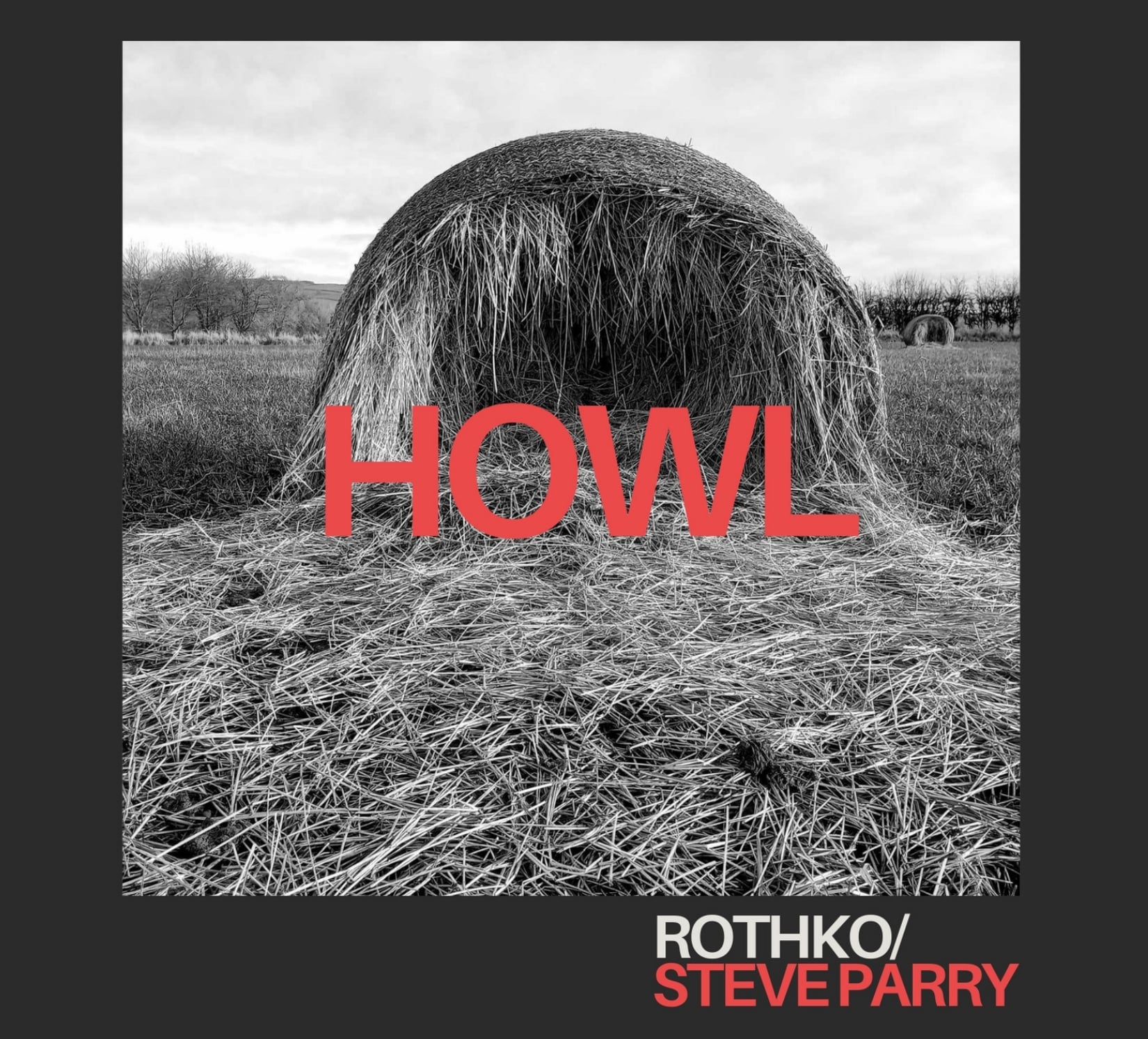
HOWL - Rothko - Steve Parry


                                                          HOWL


ROTHKO AND STEVE PARRY
CAT NO. TRACEHWYLCD001

After being friends for over 20 years, with the occasional contributions to each other’s recordings HOWL is the first full collaboration between Mark Beazley (Rothko) and Steve Parry (Hwyl Nofio - Neu Electrikk).

Emanating from the sounds of a church organ, with many short pieces recorded by Parry in an ancient secluded church then embellished by Beazley, with his resonant based tones, electric guitar and electronics HOWL captures the senses of ambience, harmony, discordance and noise. Recordings of the church’s space, its hollow emptiness interspersed with the music.
The two long, resulting pieces create an almost ritualistic event of something taking place that is mysterious, uplifting and in parts…..unsettling.

The CD will be available from the Rothko Bandcamp page


and will be available on all the main streaming platforms.
For any further information please contact Mark Beazley 
mlbeazley@mac.com


ROTHKO

Mark Beazley has been releasing music under the name Rothko since 1999, on labels such as Lo Recordings, Bella Union, Too Pure, and since 2003 his own Trace Recordings label.
Creating music using mainly the bass guitar, Rothko’s sound is known for its darkly cinematic atmosphere and chiming counterpoint melodies.
He has collaborated with many artists; including Susumu Yokota, Jon Tye, Graham Dowdall [aka Gagarin] (now very sadly deceased) , JohnnyBrown and James Stephen Finn of Band of Holy Joy, Steve Parry [Hwyl Nofio and Neu Electrikk] along with many others.

STEVE PARRY

Steve Parry is a Welsh guitarist and composer, founder of the experimental band Hwyl Nofio. He co-founded the post punk band Neu Electrikk. He has recorded with Colin Potter of Nurse With Wound and also Matt Johnson of The The. 
Parry is a product of the South Wales Valleys, his formative years were spent living in the shadow of the Black Mountains in the town of Pontypool, amidst the scars of the heavily industrialised landscape.
His compositions frequently refer to the catharsis of childhood where he would sit beside his mother as she played the church organ on Sundays,as well as the larger surrounding environment.The constant drone and mechanism of the church organ fascinated him and the hymnal facets are to be found in his work.
Hwyl  Nofio was formed by Parry in 1997. It is an evolving assembly based around its originator. Parry refers to the approach of his music as a marriage of dilemmas being resolved in another space. The music explores and exploits a collision between harmony and disharmony. It gives the impression of being both dark and welcoming at the same time.
The band over the years have released seven albums. Parry is the only constant member along with invited guest musicians; including the experimental harpist Rhodri Davies, Mark Beazley of the instrumental ambient bass group Rothko, Danish fractal guitarist Frederick Soegaard, Hungarian guitarist Sandor Szabo and percussionist Balazs Major amongst other musicians. Collectively the musicians blur the boundaries of musical genres making the music difficult to categorise.
Parry has a longstanding friendship with Mark Beazley and their creative output has consisted of contributing to one another’s albums. 
HOWL will be their first collaborative project together.


The CD will be available from the Rothko Bandcamp page


and will be available on all the main streaming platforms.
For any further information please contact Mark Beazley 
mlbeazley@mac.com


Sunday, 3 March 2024

WOMB


THE LEGENDARY ALBUM BY STEVE PARRY AND COLIN POTTER. RECORDED IN 1981 AND RELEASED IN PHYSICAL FORMAT /LTD EDITION FOR THE FIRST TIME IN MARCH 2024

STEVE PARRY + COLIN POTTER

WOMB

Credits:


Recorded: (1981) at Integrated Circuit Studio,  Sutton–on-the-Forest, York & Wern Studio, York.

Field recordings (1981) by Steve Parry on a Sony portable cassette tape recorder. 

• Engineered by: Colin Potter

• All Instruments / sounds – Steve Parry & Colin Potter 

• Produced by Steve Parry & Colin Potter

Notes: Instruments/devices used in the recording included; saw, plastic bucket and plastic tube, water, alarm clock, cotton rags, metal bars, electric drill, drum machine, bongo drums,  analogue synth & sequencer, field recordings, electric, acoustic & bass guitars, flute, keyboards, found sounds, comb &  voice.

All tracks mastered by Colin Potter at ICR, London 2021

Artwork concept: Jason B.Bernard & Steve Parry

Design: Oleg Galay 

© Hwyl Records / ICR

Peripheral Minimal Records 2023.

PM34

p 2023

A History of the Recordings


STEVE PARRY


Steve Parry:- “In 1981 I moved north to York having spent the latter part of the 1970s living in South London. During the time I worked with the likes of Post-Punk bands Matt Johnson/TheThe and Neu Electrikk. Neu Electrikk released two independent 45’s and contributed to The Some Bizzare Album. An album was recorded but not released. Neu Electrikk continued to be a fractious affair, ultimately the band self-combusted and went their separate ways. I had over the years created experimental sounds on an old reel to reel tape recorder – avant-garde, musique concrète – sounds of automata, damaged audiotape, noise, nature, everyday objects, the tape would be edited, looped, layered, played at various speeds. I built various stringed devices and developed a non-standard guitar technique that made use of prepared guitar (e.g. putting a nail file and screws on the strings, playing the guitar with pliers, meat skewers, nail files and a dinner fork) the key features being unconventional tunings, timbres, drone, distortion and noise – often  treating the guitar purely as a sound source rather than a musical instrument. In addition I developed a stringed musical instrument essentially based on the violin which is further linked to a series of effects pedals. The sounds are generally described as experimental / avant-garde music. Around this time I would visit Red Rhino, a local independent record store started by Tony Kostrzewa aka Tony K. Tony gave me the contact details of Colin Potter who had a small recording studio at his home in Sutton-on-the-Forest, north of York. The recording sessions for Womb took place sporadically over a period of a few months. I would enter the studio armed with all manner of traditional instruments and devices including; guitar, flute, Drum machine, home-built glockenspiel, bongo drums, a saw, drill, hammer, bucket, an alarm clock, Casio organ, metal bars, length of hose pipe etc. plus home recordings I’d made of birds and other sounds recorded on a portable cassette player – During this time Colin and I also recorded two tracks “Ssroi’asitjk” and “Later That Same Night” for what was to become Colin s album “The Where House” originally released on cassette in 1981. Womb remained unreleased other than a few cassette tapes given to friends. In 2014 I re-discovered the album master tapes while having a house clear-out. The Ampex 406 master tapes were severely damaged due to natural deterioration, the original tape had to undergo a time-consuming restoration process. Thankfully the project was salvageable and the music was transferred to digital. I must admit listening now to these recordings I am reminded of the creative surge and ebullient enthusiasm for making the music. It was indeed an exciting time. Since 1998 Steve Parry has recorded numerous projects as Hwyl Nofio.

Steve Parry. York 2021 


COLIN POTTER

ColIn Potter:- Back in the early 80s I had built a small studio in an outbuilding at my house in a village just north of the city of York. It was pretty basic, just one room with 4 & 2 track tape machines, a small mixer & a few basic effects units. There was also a Korg MS20 synth & SQ10 sequencer, a crude drum machine, a Casio keyboard & various guitars & microphones. Most of the work I did involved relatively conventional music, whereas I was more interested in something more unconventional. So I was very happy when Steve contacted me & asked if I would be interested in collaborating on an ‘experimental’ project. Over a number of sessions we tried all sorts of odd instrument combinations, sound sources & treatments. As it’s so long ago, my memory is a little hazy, but I think it’s fair to say that improvisation was an important element. I clearly remember that we had a lot of fun. When it was mixed, I don’t think either of us knew what to do with it, as it was unlike any other music that was around at that time. So it languished….

Due to various house moves, Steve & I lost touch & I eventually moved away from Yorkshire, my favourite part of the world. A few years ago, on a short holiday in York I wandered into a pub that I’d never visited before & there was Steve, who I hadn’t seen for around 20 years. Full circle. We decided that the lost album should be released & Steve had the original ¼’’ tapes baked & I’ve now remastered the original recordings. Listening to it was a strange experience. Many times I had to try to remember what some of the strange sounds were, or why we did this or that. The sound of convention & caution being thrown to the wind.

I’m glad we did it & I hope you like it.


Colin Potter, London 2021


WOMB is available from the following outlets:-


ICR Distribution

https://icrdistribution.com/

Peripheral Minimal Records  

https://www.peripheralminima


Friday, 17 April 2020

Hwyl Nofio - Isolate


Hwyl Nofio - Isolate is very much a creative response to the virus Covid-19 which has gripped much of the World for many months now. As scientists seek answers the World is effectively in a state of lockdown with populations told to stay at home, stay safe and isolate to reduce the impact of the virus. It's a crazy situation we find ourselves in but it is also an opportunity to create and share and bring comfort to other people.
I cannot thank enough the people who have helped make Hwyl Nofio - Isolate happen in a such a short period of time. I'm extremely proud to have some old friends contribute to this project. Many of you will recall Mark Beazley for his wonderful contribution to the Hwyl Nofio albums Hymnal and Dark. I also had the pleasure of contributing to Mark's album project Rothko - Blood Demands More Blood. I also feel excited to be working again with Steve Sherlock a musician I have known for 40 yrs since being together in the Post Punk band Neu Electrikk. Last but not least I am delighted to have on board the incredible Rhodri Davies, a musician I have known and admired for many years.
Finally I would like to dedicate this album to my daughter Victoria. Vicky understands isolation having suffered for many years the debilitating disease Crohns. The pain and isolation of chronic disease, yet possess the ability to put aside pain and anxiety to embrace life for what it is. A more positive and inspirational person I do not know.

Hwyl Nofio were:-
Steve Parry with
Mark Beazley 
Rhodri Davies
Steve Sherlock

Download available from:- https://hwylnofio.bandcamp.com/

Please support Crohns & Colitis by making a donation to:- https://www.crohnsandcolitis.org.uk/

Kind thanks for your support - Stay safe

Steve Parry (April 2020)

Saturday, 8 June 2019

The Beholders Share - Installation soundtrack


In 2016 One&Other Creative recruited avant-garde musician Hwyl Nofio to create an immersive sound installation piece for Art Market, York - an arts event (30 Sept – 2 Oct, 2016).
The Beholders Share - Perceive then as your own
Alois Reigl (1858–1905) suggested a new psychological aspect of art: - art is incomplete without the perceptual and emotional involvement of the participant. Later Viennese art historians E Kris & E.H Grombrich elaborated; Art is not art without the direct involvement of the observer.
When an artist produces a powerful work, perception is inherently ambiguous, the ambiguity in the piece elicits both a conscious and unconscious process of recognition in the observer, who responds emotionally and emphatically to the work in terms of his/ her own life experience, therefore the artist creates the work based on their own personal sensory information and the beholder re-creates it by responding to its inherent ambiguity and makes it personal to them.
All art is an inherently pleasurable and instructive attempt by the artist and beholder to communicate and share with each other the creative process that characterises every human brain – a process that leads to a sudden recognition that we have seen into another person’s mind that allows us to see the truth underlying both the beauty and the violence depicted in the work. Sound is a language all of its own and can move us to the heights or depths of emotion. A creative work is only completed when the beholder embraces the work. Perceive then as your own…….
Steve Parry/Hwyl Nofio
Installation.
The Beholders Share installation played continuously on a looping system in a small darkened room containing only 12 chairs.Throughout each day of the event an orderly queue formed, waiting patiently to enter the space . I would like to thank One&Other Creative for the opportunity to create the installation and everyone who came along to the event or purchases the soundtrack download. Many thanks for your support. It is hoped the installation will resurface for future art/music events - stay tuned! 
The Beholders Share film can be viewed here: https://vimeo.com/334865786


Steve Parry - instruments, sounds. 

Derek Yau - cello.


Released: 14/06/2019


Sunday, 1 July 2012

Hwyl Nofio - Dusk - DARK


"There comes a time when silence is betrayal"
(Martin Luther King)

Scotch Cattle was the name taken by a secret brotherhood of coal miners in South Wales. Dressed in cow skins, wearing elaborate headgear comprised of the severed head of a black bull, the gang would raid at night, visiting and terrorising the home of a local miner known to be working during a strike or liaising with an employer against the local mining community. Sometimes as many as 300 men would gather high on the mountain. With torches ablaze they would arrive at a house announcing their presence by screaming and shouting, blowing horns and rattling chains. They would break-open the house door, smash windows, destroy all furniture and burn any fabric items in a bonfire. If the homeowner were to resist he would be beaten severely, regularly breaking their bones so as prevent them returning to work. Several members of these bands were possibly idealists, but others were local thugs merely looking for a chance to loot property from the groups' targets—or even, in some cases, from bystanders. The brotherhood flourished during the 1820s and 1830s, the last confirmable reference to a Scotch Cattle raid dates from 1850. However, in 1926, the Scotch Cattle were revived by pickets in the great strike who dressed themselves as Scotch Cattle, evoking the memory of the terroristic enforcement of solidarity that the Cattle had carried out in the past. The origins of the name Scotch Cattle are unclear – one theory is the name derives from the idea a local mine owner kept a herd of Scottish Black Cattle. The stealing and skinning of the animal could be seen as a provocative act, an act of defiance, solidarity against the appalling working and living conditions subjected on the men and their families by the rich landowner.


Hwyl Nofio - Gone - DARK


I recall as a boy visiting my grandfather’s house in New Inn, Pontypool and being enchanted by a painting prominently displayed above the fireplace. The image was of a racing pigeon, handwritten on the canvass were the words 'QUARRY QUEEN’, 1st Ripon, Pontypool Club, 1954. Bred and Raced by Mr J Hughes. The image has resonated throughout the years and today remains in my possession – treasured, a constant reminder, exhibited prominently on my living room wall. So what makes this painting so important to me personally? Well he was my Grandfather and I cannot ignore the sentiment involved, but hidden in the paint of this picture is a message that remains to this day.

Around 1910 John Hughes came with his father, brothers and sister from the Shropshire hills to South Wales, to the eastern valley in search of a new life. It had been a difficult time; his mother had died at the age of 37, devastated by the loss, father moved the remaining family, walking over 100 miles to Pontypool to make a fresh start. Through family contacts they found a place to stay, unfortunately there wasn’t enough room for the boy in his father’s house, consequently John age 12yrs was farmed-out to a distant cousin, a person he'd never met, to work the land. Displaced, living in a household through obligation not choice, a family who were poor with little food to feed an additional mouth, John felt unwanted and so took to the hills to trap rabbits to allay hunger. Not wanting to return home he'd wander alone on the mountain, in winter ‘pissing’ on his hands to stay warm and outside. Pontypool in those days was an ugly, vibrant, dangerous place, a heavy industrial landscape where coal mines and steelworks dominated the valley and its people. John was between 13 and 14 when he started his first real job in the mines, taking care of the pit ponies. At the age of 15, John went to work at Tirpentwys Colliery where he spent the majority of his working life digging for coal with a pick and shovel, deep underground in an anthracite coal seam, barely a foot deep. After the shift ended, the lift would bring the miners to the surface - then they would see daylight. There were no pit head baths so John went home black from the coal dust to wash in old tin bath. Mining remained his life until he retired through ill health – coal dust choked his lungs and ultimately black lung disease took his life.

Throughout childhood I spent a great deal of time listening to my grandfather’s stories. He remains a larger than life character, a hero to the present, and his thoughts and ideals echo through me to this day. I particularly recall running my fingers over his near bald head and feeling a prominent ridge that ran front to back and east to west on his skull. During an explosion in the mine the coal had fallen in and cracked his head like a walnut – they took him home from the mine and laid him out on the kitchen table to die!

The keeping of racing pigeons was a popular hobby among coal miners. John had a loft in the back garden and from here he would rear young birds to race. Pigeon racing is a sport in which specially bred and trained pigeons are released from specific locations. They then race back to their home lofts. As a member of the local pigeon fanciers club John would spend many non-working hours talking birds with other pigeon fancying friends. Quarry Queen remained his special bird – to him she was the stuff of legend – so much so – a commemorative picture was commissioned as a prize by the artist T.H Edwards. I have since discovered via a BBC documentary that racing pigeon painters is an art form in itself

John Hughes never ventured far; Cardiff remained an exotic distant location. Holidays were a trip on a steamboat on the lake in Roath-Park. Gloucester, through the Forest of Dean appeared like a journey into Outer Space. Never in his lifetime did he go abroad – everywhere outside of the valley appeared foreign.

What John lacked in miles above ground, he made up for in his imagination. Quarry Queen would be his eyes on the world, fly the depth and breadth of the land, what she saw, he said, she relayed back to her master. This mythical bird gave to my grandfather an enormous amount of pleasure. I suppose to him Quarry Queen represented a life elsewhere, a world away from the grim reality of life underground. Quarry Queen represented freedom – perhaps a yearning for what might have been.


QUARRY QUEEN (1st)  Bred and Raced by Mr J Hughes

Wednesday, 18 April 2012

Herbert the Steelroller


Herbert the Steelroller - composition - Hwyl Nofio - Dark

In my recorded work I have occasionally referred to steel manufacture and the memory of my grandfather Herbert Parry - The abstract guitar composition ‘From Elevated Gangways Rivers of Molten Metal Flow’ underlining the experience of visiting a steelworks.

Herbert worked as a steel roller and unfortunately died of gangrene poisoning when I was only 3 years old. A quiet, dignified gentleman – he was someone I would have liked to have had the opportunity to know better.

I recall in my youth walking along a public footpath that cut through Panteg Steelworks on my way to secondary school. The sights, sounds and smell of the place reverberate to this day. The blistering heat of the furnace, the white light sparks the deafening thud of an industrial hammer and the noxious gasses that remained long in the nose and throat.  

All that remains today are the echoes of memories of a once heavy industrial landscape. Currently the site is being developed as residential housing and the Parc Panteg housing estate. The industrial buildings and structures have been removed and remedial work in relation to land contamination has been carried out, in its place there appears yet another LEGOLAND development with the promise of a better lifestyle, devoid of character.

But what about people and jobs you may ask. Panteg steel works was founded in 1873 and operated for over 130 years until its closure in 2004. At one point 900 people were employed producing stainless steel at Panteg. Throughout its history many thousands of people including my grandfather Herbert Parry were employed in the manufacture of steel. Others benefitted throughout the local community as the factory provided work for many trades and businesses.

Working in steel production was extremely hard, hot, filthy work that often acutely affected your health, but it wasn’t only a job it was the opportunity of employment and with it a way of life.

Today – the eastern Afon Valley seems intent on promoting itself in terms of its industrial heritage. Museums of rail, steel, iron and coal attract visitors from far and wide to experience the relics of the past and presumably part with their cash. Men dress up as coal miners and tell a tale or two as the cage descends into the dark – the illusion is real!

Culture and society are intricately related. Through culture and society people and groups define themselves. Today the valley appears to have become an industrial theme park?

What follows is a partial account of Herbert’s working life by my father John Parry.
 
HERBERT PARRY - STEELWORKER - EARLY MEMORIES OF THE LATE 1930s AND 1940s

My Dad, Herbert Parry was a Roller in the Richard Thomas & Baldwins Steelworks at Panteg about a mile and a half from where we lived in New Inn, Pontypool.

A roller was the leader of a team of men who took Steel ingots which had been heated in the furnaces to a very high temperature and rolled the steel in large metal rollers until it was the required thickness and size. There would be a number of Rollers in a large steelworks like Panteg.

The roller was paid on the tonnage they processed and he then paid his men. The roller had to be highly skilled and was rewarded accordingly.

I remember asking my Dad why he did not progress to Manager of all the rolling mills and he told me he would be getting a lot less money. I believe at the time my Dad was earning £20 a week compared with the Manager's £8 a week.

The roller and his men had very tough and onerous jobs. They had to manhandle the steel ingots on to the rolling mill and using large tongs they manoeuvred the steel back and fro between the large rollers until it met the size needed and the right quality. My Dad liked dealing with stainless steel as it was very challenging and possibly more lucrative for the team.

The heat in the rolling mills and furnace areas was very high which, with the heavy work, made the men sweat profusely. They all wore flannel shirts with a sweat clothes around their necks and needed to drink a lot to stop being dehydrated. During the shift they drank a lot of tea which they had brought from home in metal canisters. I can remember I was often asked by my Mam ( Hilda) to take a fresh can of tea to my Dad at the Steelworks during the shift. To get there I used to go along the road to Griffithstown and cut across the fields and then climb over a large pipe to cross the Afon Llwyd river and then go in the back way to the Rolling Mills. My Dad was always pleased to see me with the tea which was very welcome.

After the shift my Dad took his team to the pub near the Steelworks and made sure his team made up for the moisture they had lost. My dad had a good team and it was his way of showing his personal appreciation for their hard work. They then went home for a good bath as they were dirty and their clothes were sweaty.

During the evenings when my Dad was not working he would go to meetings of the Royal Order of Buffalos of which he was President, to the Home Guard or to socialise with friends at the pubs in the village. My Dad was a very generous man and usually would be the first up to the bar.

My visits to the Steelworks gave me a good insight on what it was like working there. Sometimes, when my Dad and I were having an argument, I would say that I was going to work at the Steelworks which was the last thing he wanted me to do. This did not happen very often as my Dad was a very even tempered and gentle man.

Unfortunately, by the late 1940's my Dad was taken ill with dermatitis and had to give up his job as a roller as it was considered that his illness was related to his work. He took a job as a labourer in the steelworks which was a huge drop in wages. At the time he was just over 50.

I often thought that maybe he would have been better off if he had accepted the earlier offers to be a Manager but it is easy to be wise after the event.

The large drop in income made a big difference in my Dad's life style and I was sad to see many of his friends disappear. There were some loyal friends who tended to be in the same situation as my Dad and they remained loyal. This was a lesson to my Dad and to me.

John Parry, April 2012